
Thomas More University Leads Forward: Reflections from the Vatican Builders AI Forum
Submitted by John D. (Jack) Rudnick, Jr., Ed.D., professor, Robert W. Plaster College of Business, and director of the Master of Business Administration (MBA) program
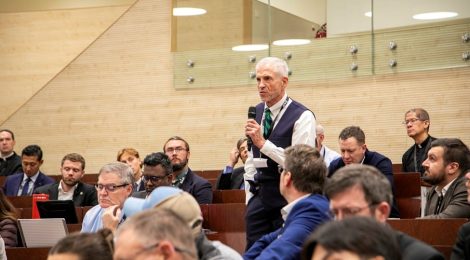
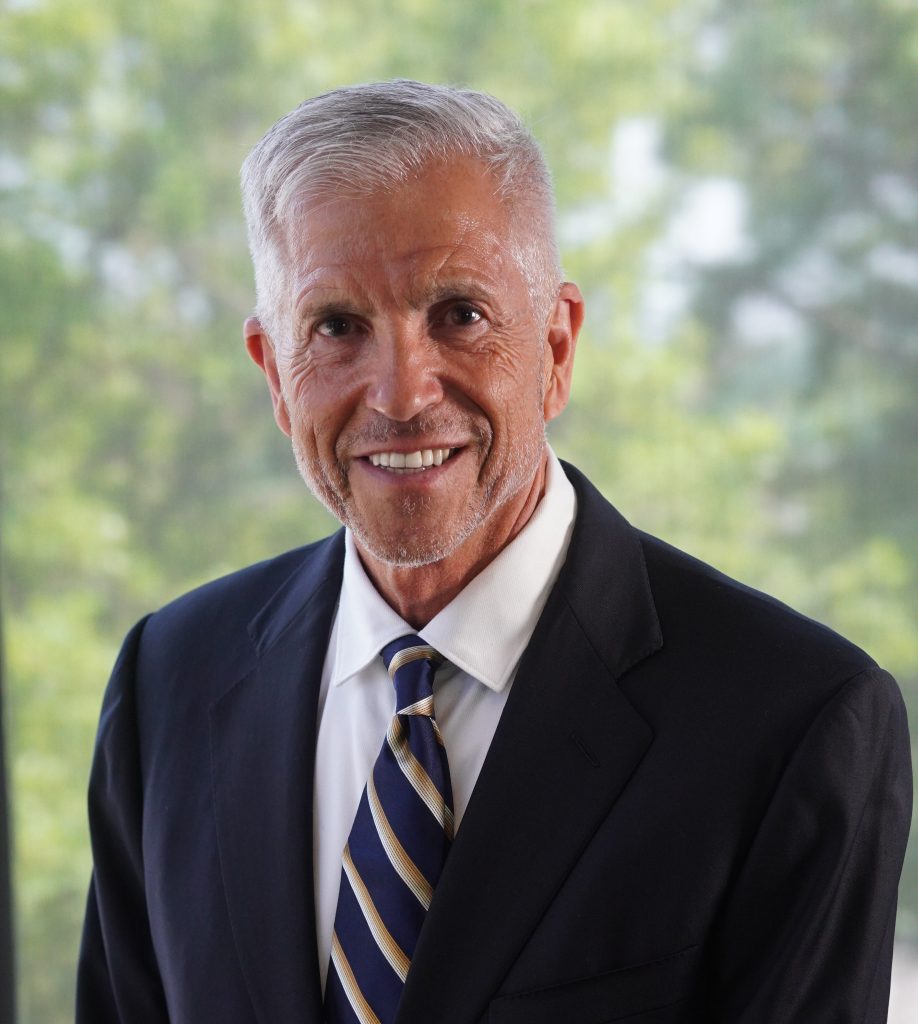
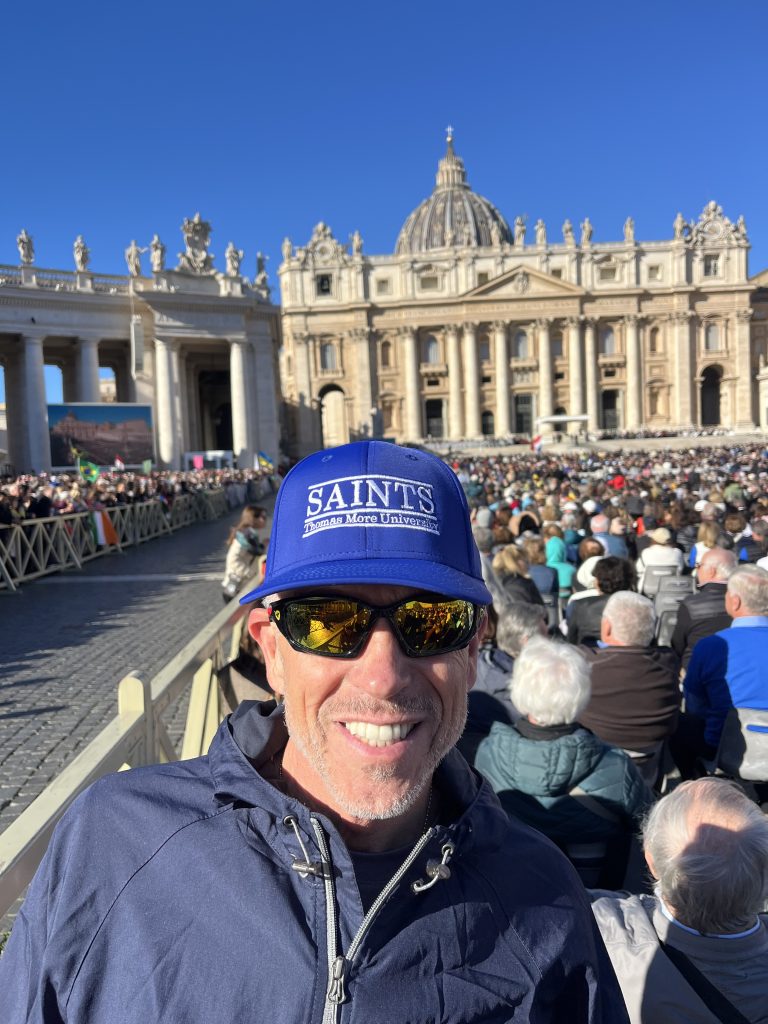
Dr. Jack Rudnick, Jr., professor, Robert W. Plaster College of Business, represented Thomas More University at the Vatican Builders Artificial Intelligence Forum held at the Pontifical Gregorian University November 6–7, 2025 in Rome, Italy.
This was a gathering of Catholic leaders, scholars, clergy, entrepreneurs, educators, and innovators to discuss one of the critical questions of our time: How should the Church faithfully, responsibly, and imaginatively integrate artificial intelligence (AI) into its mission?
The main sessions of the forum were held at the Pontifical Gregorian University, with related opportunities in the historic Venerable English College and the Ukrainian Pontifical University (an additional post-conference session). At each of the three venues, the atmosphere was characterized by the same intellectual vibrancy, spiritual rootedness, and deep collaboration. It was evident that the Holy Spirit was fully engaged in the forging of what many participants described as a new techumenical moment for the Catholic Church: one in which technology, theology, and human dignity come into genuine alignment — not only in our Catholic faith but with communities galvanized by an ecumenical desire to follow moral guidelines.
A Global Church at the Same Crossroads
The single most important realization was that of the universality of “the struggle.” Whether it was representatives from Europe, Australia, Asia, North America, or South America, the questions were the same:
The rest of the world is standing at the same crossroads as we are. The uncertainty is shared, the discernment is shared, and perhaps most encouragingly, the hope is shared.
What do we do with AI? How much access is appropriate? How do we protect children? How do we maintain academic integrity? How do we uphold the Catholic vision and dignity of the human person?
Participants spoke repeatedly about a bright, purposeful determination to keep the Catholic faith living and thriving in the midst of the rapid changes wrought by technology. Their dedication affirmed that Catholic institutions, with our long tradition of uniting Fides et Ratio, faith and reason, are particularly well-positioned to take the lead.
The Holy Father’s Message: AI as Participation in Creation
A highlight of the Forum was the message sent by Pope Leo XIV, who reminded us that artificial intelligence is not only a question of what machines can do but who we are becoming through the technologies we build. He underlined that every form of technological creation represents an action derived from the creative capacity God entrusted to humanity. For this reason, technological innovation — when rooted in love, justice, and moral discernment — can be understood as participation in God’s ongoing act of creation.
The Holy Father called on all practitioners of AI, scholars, and Church leaders to foster moral discernment and to develop systems that reflect solidarity, justice, reverence for life, and the dignity of the human person. He wrote that this work cannot remain confined to laboratories or investment decisions but must be a profoundly ecclesial endeavor, serving evangelization and the integral development of every person. His words gave the Forum its spiritual anchor and set a clear expectation: AI must always remain relational, intelligent, and guided by love.
Algorethics: The Ethical DNA of Catholic AI
One phrase emerged throughout the conversations to describe that guiding principle: algorethics, the moral and ethical shaping of algorithms so that they operate in harmony with human dignity and Catholic Social Teaching. If algorithms increasingly shape our world, then Catholics must help shape those algorithms. (Failure to “be at the table” when large language models (LLMs) are being developed for the input upon which AI produces outputs will eventually render Catholics irrelevant.)
This vision is far from being a strictly technical one; it is essentially theological. It aligns with the Church’s firm claim that every design choice speaks to a vision of humanity. AI can not displace or diminish human relationships, pastoral presence, or the reality of incarnational teaching and formation. It must always remain supplementary to, not a replacement of, mentors, teachers, ministers, or parents.
Key Findings from the Higher Education Cohort
In the cohort on Catholic Higher Education (about thirty participants), it quickly became clear that no institution anywhere has fully “solved” how to integrate AI. Instead, everyone was trying to navigate the same tensions and opportunities.
Our working group identified a number of shared commitments:
–The strategy of ignoring or forbidding AI will no longer work. Students already live in a digital ecosystem. Prohibition is not formation; engagement is.
–What is needed urgently are formation-based, mission-aligned guidelines for K–12 and university contexts alike.
–Developmental distinctions count. Younger learners need strong guardrails, scaffolding, and closer supervision; older learners need transparency, accountability, and ethical reasoning.
–Human relationship remains central. Community, encounter, mentoring, and spiritual accompaniment cannot be replaced by AI.
–With children, chatbots and generative tools can never be used in isolation, but they can support exploration when guided by humans.
–Stakeholders must have a common vocabulary. Parents, teachers, clergy, administrators, and students should show an understanding of the same terms and expectations.
–Knowledge gaps are usually filled intentionally. Many of the concerns originate not out of reality, but out of fear, limited literacy, or media exaggeration.
–Proactive policy design reflects the Catholic tradition of critical inquiry. The Church has never retreated from new knowledge; it has always discerned it.
Moving Forward: A Collaboration Task Force
A formal working group has been assembled, and it will keep meeting virtually. Its objectives will include the drafting of guidelines, establishing best practices, making age-appropriate boundaries clear, and designing a formation-centered AI framework that is adaptable across Catholic institutions worldwide. For Thomas More University, the opportunity to participate in such a global initiative places us at the leading edge of ethical, mission-anchored integration of AI within Catholic higher education. It affirms our conviction that technology, when shaped by faith, can serve as a powerful instrument for learning, evangelization, and human flourishing.
Comments are closed, but trackbacks and pingbacks are open.